For years, Nigeria depended heavily on imported refined petroleum products from countries across Europe, Asia, and beyond. But once Dangote Petroleum Refinery began production, following its first crude delivery on December 12, 2023, the story was no longer only about what Nigeria could gain. It also became a story about who might lose. Using Nigeria’s 2022 refined petroleum import data as a baseline, my visualization shows that 63 countries had some level of petroleum export revenue exposure to Nigeria, meaning they could be affected if Nigeria increasingly meets domestic demand through local refining rather than imports.1
The countries that appear most exposed are the ones that earned the most from petroleum exports to Nigeria before Dangote Refinery came on stream. In the data, the top five likely impacted countries are Belgium ($6,828.84m), Netherlands ($5,606.21m), India ($2,370.50m), Norway ($1,640.14m), and the United Kingdom ($923.24m). At the other end, the least likely impacted countries among those with recorded export value are Hong Kong ($0.01m), Burundi ($0.01m), Luxembourg ($0.01m), Denmark ($0.01m), and Rwanda ($0.01m), each with only a negligible share of Nigeria’s 2022 import market.
What makes this interesting is that one refinery in Lagos could quietly reshape revenue flows across dozens of countries. Some of the biggest losers may not even be the most obvious names in global oil conversations, while others may barely notice the change at all. That is why this map is worth more than a glance. It raises a bigger question: if Nigeria truly reduces dependence on imported refined products, which countries will feel the shift first, and by how much? I would really like to hear which country on the map surprises you most.
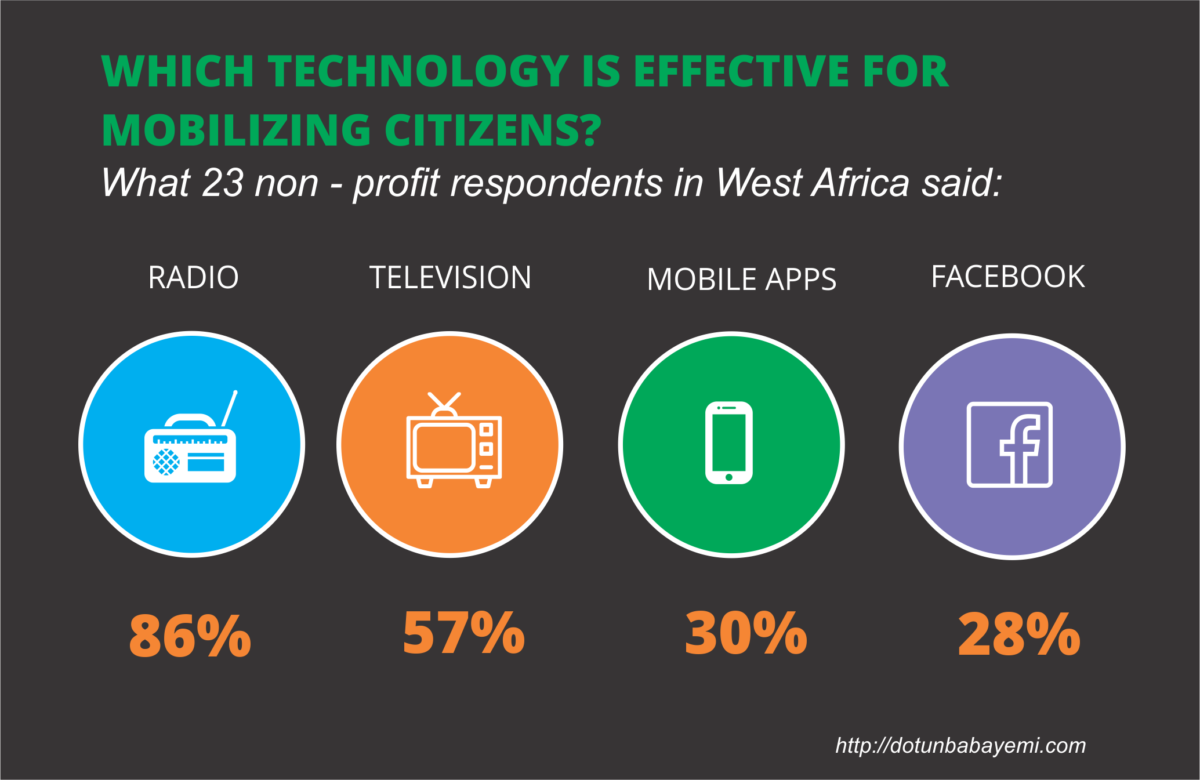
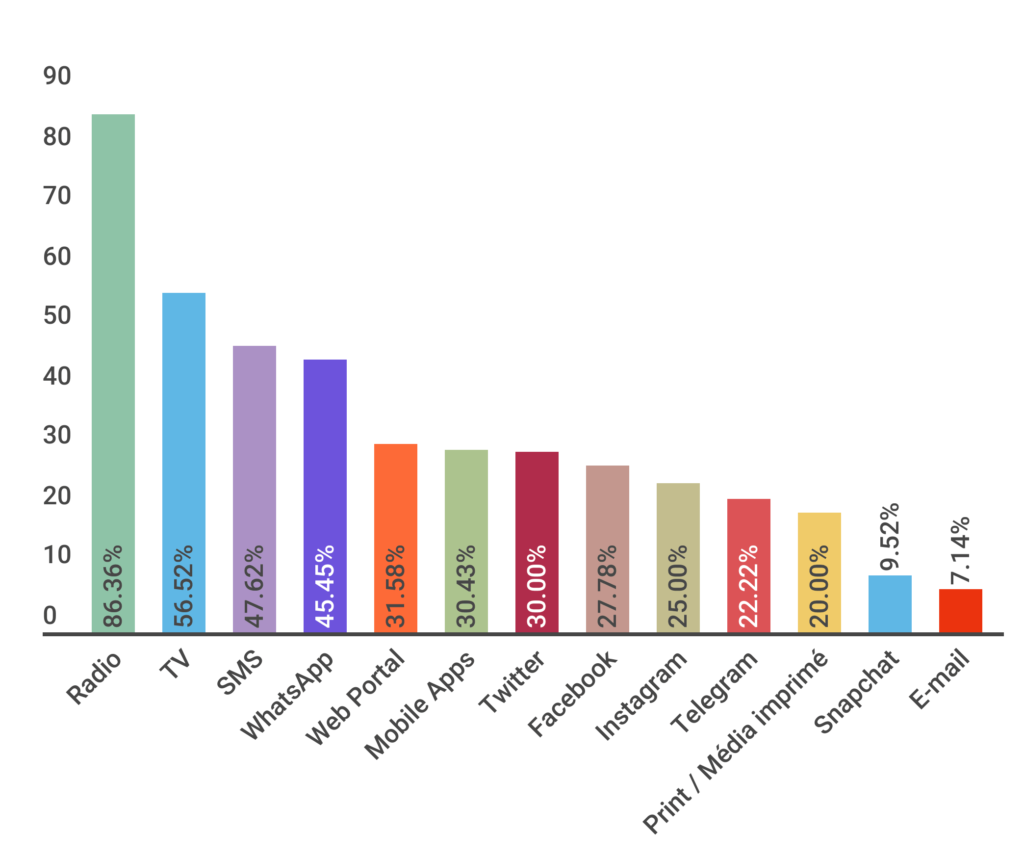
In a recent survey of 23 non-profit organizations, working in 18 countries in West Africa, on making their government accountable, 86% affirmed that the radio had become a useful tool in mobilizing citizens to take action. 74% of the respondents also said that Radio is the most effective tool to use in getting a response from a government agency. Furthermore, in my case study of 9 non – profit organization in Nigeria, Ghana, Liberia, and Sierra Leone, I found out that the most effective technology tool to mobilize citizens and also to get government response is the Radio. Its reach, cost-effectiveness, and popular culture set it apart from new technologies such as Facebook and Twitter whose growing penetration are stagnated by the accessibility and affordability of the internet in this region.
23 Non Profits working on Transparency and Accountability in West Africa told us the most effective accountability technology for mobilizing citizens.
Almost every household in Africa has a Radio, and it has become the most used medium to get information. In the four countries – Nigeria, Sierra Leone, Ghana and Liberia, 8 in 10 people have mobile phones. The proliferation of mobile phones is commendable, which has also led to the integration of the Radio, and the Internet. However, only 3 out of 10 are using the internet in West Africa according to the 2017 United Nations World Statistics Pocketbook. Although one might argue that access to the internet has been encouraging in the region, I think its effectiveness remains in the kind of usage. For instance, does the larger population use the internet to listen to music, mobilize themselves or use it for intellectual research or discussion?
A recent study of the report published by Cable UK on the cost of broadband internet in 196 countries showed that the average price paid for internet in 10 West African countries is $226 in a month. In this region, six out of ten people live under US$1.90 in a day, as such, it becomes difficult to afford US$50 for internet per month. It is only a few people living in city centres that can afford to pay for internet to access Facebook, Twitter or even read emails. On the other hand, with less than US$1 you can purchase a Radio, and get information from several channels. Nevertheless, one might not want to overlook the partnership initiated by Facebook with some mobile internet providers, in which Facebook is accessed free of charge on feature phones. Whether this will become a norm, we will see in the near future.
23 non – profits in West Africa told us their most effective technology tool to ensure government response
In Africa, it is not unusual to see people craving to listen to someone speaking in their local language. 22 out of the 30 most linguistically diverse countries in the world are in Sub – Saharan Africa. 7 out of them are in West Africa. It is a culture, and this is how Radio is used to take the conversation of citizens engagement to people in West Africa. Facebook, Twitter and Instagram are put together in languages that are not inherent in West Africa countries. This might point to the cultural norms theory which indicates that media tend to establish the standards or norms which define acceptable behaviour in society. The use of local languages in radio programming is becoming more appealing to the larger population in West Africa as seen in countries like Nigeria, where stations using local languages have the highest listeners.
If it is true that technology is moving faster than the human race, then the potentials in early technologies like the Radio, might be revisited. Perhaps, several integrations to make it more responsive to 2 -way conversations might be a welcome idea. For democratic enthusiasts, if Radio is still the favourite media in which the bottom billion gets their information, it would be of interest to curate programming that promotes democratic values in local languages. Again, It is no gainsaying that social media is becoming popular among the young generation in this region, however, I can argue that only a few participate in governance issues on-the-ground. If you feel otherwise, or think something might be missing, please feel free to comment below.
These are some of the results of my research on digital tools used by civil society organizations in West Africa to promote democratic accountability.A more detailed version of this topic will be published in an online handbook titled Accountability Technologies.